Some facts about angles and triangles, Right Angle Triangle Side Calculator (Pythagoras Theorem), What is an Acute vs Obtuse Triangle
Similarity of triangles is a very interesting and sweet topic of the mathematics. But for understanding this topic with full of clarity, we must have to understand some basic facts related to triangles. So let’s start with the definition of a triangle.
(A) Definition of triangle/ what is a triangle?/ which figure is considered as a triangle? Triangle definition
A two dimensional closed figure will be considered as a triangle only when:
(1) There will be three sides,
(2) There will be three angles,
(3) There will be three vertices.
(4) The sum of all interior angles will be 180 degree,
(5) It is represented by the symbol “Δ“.
We are going to consider a figure. It is a triangle because;
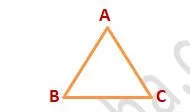
(1) The figure is closed,
(2) AB, BC and CA are three sides,
(3) A, B and C are three vertices,
(4) ∠A, ∠B and ∠C are three angles.
(B) Which figure is a closed figure? What are properties of a closed figure? Closed figure definition
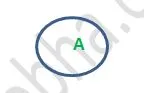
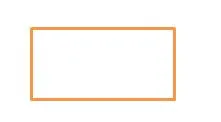
A closed figure is that 2-D (two dimensional) figure in which:
(i) Initial and final points of outer boundary are same.
(ii) A specific point inside the figure will not be allowed to go outside or from outside no point can enter inside portion.
(iii) For making a closed figure minimum three line segments are required i.e. no of sides ≥ 3
(iv) In case of irregular/regular curved shaped figure, only 1st condition is applicable i.e. initial and final points of outer boundary should be same.
(C) How to write an angle?/ Method of representing an angle/ How to write an angle? Definition of an angle.
(1) It is true that method of representing an angle is highly basic concept. But is also correct that its concept leads a major part of mathematics.
(2) Two line segments or rays (meeting at a common point) are essential for the design of an angle. These line segments or rays are called arms.
(3) An angle is the angular distance covered by 2nd arm while the 1st arm is kept static.
(4) For representing an angle there must be two line segments because one line segment cannot form an angle.
(5) Suppose an angle ∠AMB which has been given below:
In the figure at the vertex M, there is an angle which can be written in following steps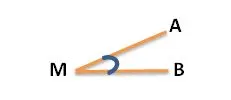
Step 1
Always there will be three letters of English alphabet in the representation of an angle.
Step 2
(1) The specific letter (at which there is an angle) must be written in the middle.
(2) For example in the above figure, there is an angle at the vertex M. So it will be written in the middle position.
Step 3
(1) Once the vertex related to the angle is confirmed, then we will move towards writing the rest two letters.
(2) Now, the angle can be represented in two ways and both will be correct:
1st way =>
(i) Either we can write A in 1st position keeping M and B in the middle and 3rd positions respectively.
(ii) So the angle AMB is the specific angle shown in the figure.
2nd way =>
(i) We can write B in 1st position keeping M and A in the middle and 3rd positions respectively.
(ii) So the angle BMA is the specific angle shown in the figure.
Step 4
After confirmation about the representation of the angle, it is essential to take decision regarding the symbol of the angle. The symbol of an angle is basically a tilted shape “L” i.e. “∠“
So the given angle can be both either ∠AMB or ∠BMA.
(D) Types of angles,/ Write different types of angle./ Explain different types of angle.
There are mainly following types of angle which are useful in the chapter of the similarity and congruency;
(1) Acute angle,
(2) Obtuse angle,
(3) Right angle
(1) Acute angle:
The angle is called an acute angle the measure of which is less than 90 degree.
Example: 45 degree, 89 degree, 89.9999 degree etc.
If we talk about the representation of an acute angle its shape is like a tilted “L“.
(2) Obtuse angle:
An angle will be considered as an obtuse angle when the value of the given angle is in between 90 degree and 180 degree.
Similar to an acute angle, it also falls in the range 90 degree<the given angle<180 degree.
Example : 105 degree, 100 degree, 90.00001 degree etc. 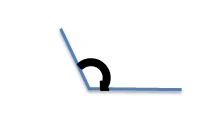
(3) Right angle:
An angle will be right angle if its value will be 90 degree.
How to understand a right angle:
There are two symptoms of a right angle:
1st symptom
One arm of the angle will be perpendicular to another arm. 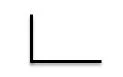
2nd symptom
The shape of angle is made by inverted “L“.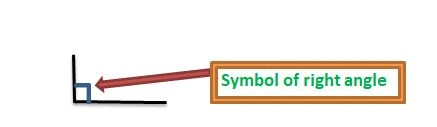
(E) Types of triangles,/ Write different types of triangle./ Explain different types of triangle.
There are basically following types of triangles useful in the similarity of triangle:
(1) Equilateral triangle,
(2) Isosceles triangle,
(3) Right angled triangle or right angle triangle
(1) Equilateral triangle:
A triangle will be considered as an equilateral triangle only when:
(i) All sides will be equal,
(ii) All angles will be equal,
(iii) Value of each angle will be 60 degree,
(iv) Lengths of altitude, median and angle bisector are equal to each other.
(v) Altitude, median and angle bisector basically bisect opposite sides perpendicularly.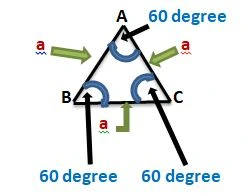
The given figure is an example of an equilateral triangle because:
(a) The length of side AB
= The length of side BC
= The length of side CA
= “a” unit
(b) ∠ABC = ∠BCA = ∠CAB = 60° (60 degree)
Now we will move toward the calculation of perimeter and the area of an equilateral triangle respectively. The perimeter of an equilateral triangle
= sum of all sides
= AB + BC + CA
= a + a + a
= 3a units The area of an equilateral triangle
= (√3/4)×(side)2
=(√3/4)×(a)2
= (√3a2)/4 unit2 The altitude from a specific vertex to opposite side
= (√3/2)×(side)
= (√3/2)×(a)
= (√3a)/2 units
(2) Isosceles triangle,
(i) A triangle will be considered as an isosceles triangle only when any two sides will be equal.
(ii) As, two sides are equal in this type of the triangle, angles opposite to these sides will be equal.
(iii) In the figure, the triangle ABC is an isosceles triangle because Length of side AB
= length of side AC
= a units Length of 3rd side BC = b units (which is different from AB and AC) ∠ABC = ∠ACB Perimeter of the isosceles triangle 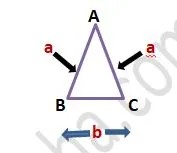
= sum of all sides
= AB + BC + CA
= a + b + a
= (2a + b) units
(3) Right angled triangle or right angle triangle
(i) First of all it is essential to explain that some books has considered this triangle as right angled triangle while some books has written right angle triangle.
(ii) That triangle is considered as a right angled triangle in which one angle is 90 degree.
(iii) Two arms directly related to 90 degree are called base and height respectively while the 3rd side which is the longest side is known as hypotenuse.
(iii) Pythagoras theorem is applicable to this type of the triangle in a below manner:
Let us consider a right angle triangle Δ ABC as follows: 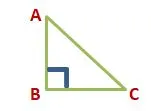
(Height)2 + (Base)2 = (Hypotenuse)2
AB2 + BC2 = AC2
(F) Pythagoras theorem
(i) Some people call this theorem as the Pythagoras theorem while some as Pythagorean theorem.
(ii) There is a slight difference between the two words “Pythagoras” and “Pythagorean” which have been tried to be described as follows: Pythagoras was a great mathematician who gave us the Pythagoras theorem. While Pythagoreans were the followers of the mathematician Pythagoras.
According to this theorem, in Δ ABC,
(Height)2 + (Base)2 = (Hypotenuse)2
AB2 + BC2 = AC2